

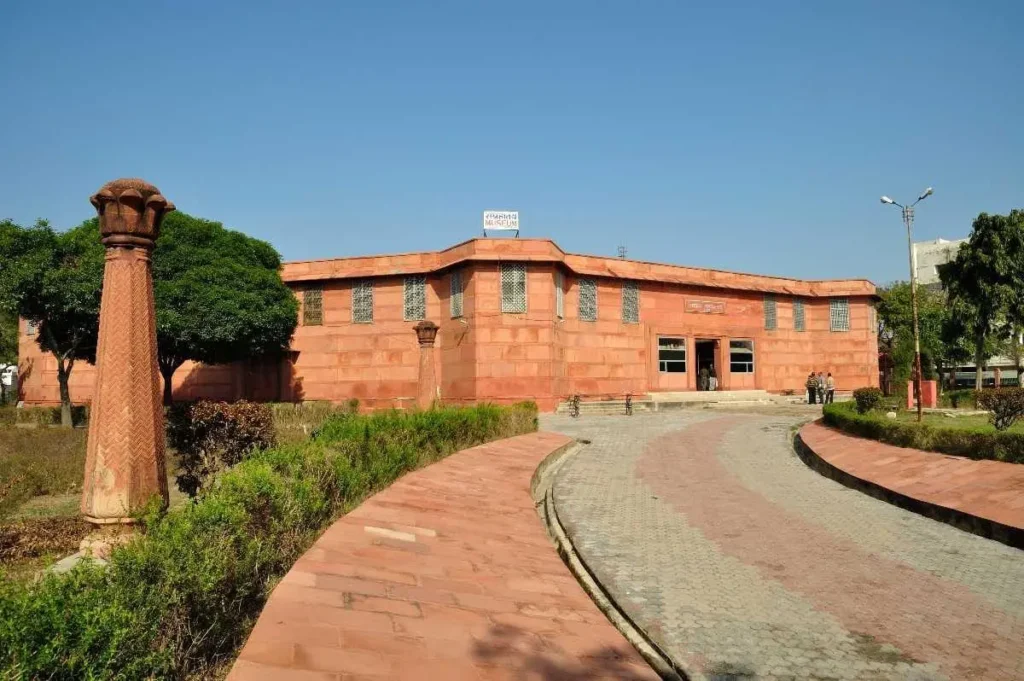
Famous Temples in Mathura: 12 Best Temples to Visit in Mathura & Vrindavan (2026 Guide)
Introduction
Mathura is one of India’s seven holiest cities, and it earns that title through its temples. Every street here seems to lead to a shrine, a ghat, or a courtyard echoing with bhajans. If you are searching for the famous temples in Mathura that genuinely deserve your time, this guide clearly breaks them down.
I have researched and compiled this list of Mathura’s best temple options, along with the most loved shrines in neighboring Vrindavan, using verified, up-to-date information for 2026. You’ll find history, architecture, and practical visiting details for each one.
Mathura and Vrindavan together form the spiritual core of Braj Bhoomi, the land where Lord Krishna was born and spent his childhood. Some temples here are centuries old, while others, like Chandrodaya Mandir, are modern marvels still taking final shape.
Let’s walk through the famous temples in Mathura and Vrindavan that should top every pilgrim’s and traveler’s list.
Best Temples in Mathura and Vrindavan
| Temple | Location | Known For | Avg. Visit Time |
| Shri Krishna Janmabhoomi | Mathura | Krishna’s birthplace | 1.5–2 hrs |
| Dwarkadhish Temple | Mathura | 19th-century architecture | 45 min |
| Banke Bihari Temple | Vrindavan | Jhaanki Darshan tradition | 1 hr |
| ISKCON Temple | Vrindavan | Kirtans & global devotees | 1 hr |
| Prem Mandir | Vrindavan | Night illumination | 1.5 hours |
| Chandrodaya Mandir | Vrindavan | World’s tallest temple project | 2 hrs |
| Radha Raman Temple | Vrindavan | Self-manifested deity | 45 min |
This table covers the best temples in Mathura and Vrindavan by location and time needed to visit comfortably.
Use it to plan your day realistically, especially if you’re trying to cover both cities without rushing through darshan.
1. Shri Krishna Janmabhoomi Temple
Among all the famous temples in Mathura, this one holds the deepest significance. It stands on the site believed to be the prison cell, Kans Karagar, where Lord Krishna was born to Devaki and Vasudeva. The complex layers of modern temple architecture over the archaeological remains of the ancient Katra Keshav Dev temple.
Security checks here are strict, and phones or cameras are not allowed inside.
2. Dwarkadhish Temple
Tucked into the old city near Vishram Ghat, this 19th-century temple honors Krishna in his regal form as Dwarkadhish. Intricately painted ceilings and carved pillars make the interior one of the most visually striking among Mathura’s best temple picks.
During Janmashtami and Holi, the temple transforms into a riot of color and devotional energy.
3. Banke Bihari Temple, Vrindavan
No list of the best temples in Mathura and Vrindavan is complete without Banke Bihari. Founded by Swami Haridas in 1864, the temple follows a distinctive ritual called Jhaanki Darshan, where curtains are drawn and redrawn over the deity throughout the day.
This tradition exists so devotees aren’t overwhelmed by gazing at the deity for too long without pause.
4. ISKCON Temple (Krishna-Balaram Mandir)
Built by the International Society for Krishna Consciousness, this white marble temple draws devotees from dozens of countries. Kirtans here continue almost around the clock, creating an atmosphere that feels both global and deeply local.
The on-site Govinda’s restaurant is a popular stop for a simple, satisfying vegetarian thali after darshan.
5. Prem Mandir
Built in 2001 by Jagadguru Shri Kripaluji Maharaj, Prem Mandir is dedicated to both Radha-Krishna and Sita-Ram. Its white marble carvings depict key scenes from Krishna’s life in remarkable detail.
The temple’s night light show, when the entire structure glows in changing colors, is what draws the largest evening crowds.
6. Chandrodaya Mandir, Vrindavan
If you’re searching for Chandrodaya Mandir, Mathura, here’s what’s worth knowing. Conceived by ISKCON Bangalore, this project is planned to become the world’s tallest religious monument at roughly 700 feet. The South Wing, or Phase 1, has been partially opened for public darshan and activities, with full Phase 1 completion expected by March 2026.
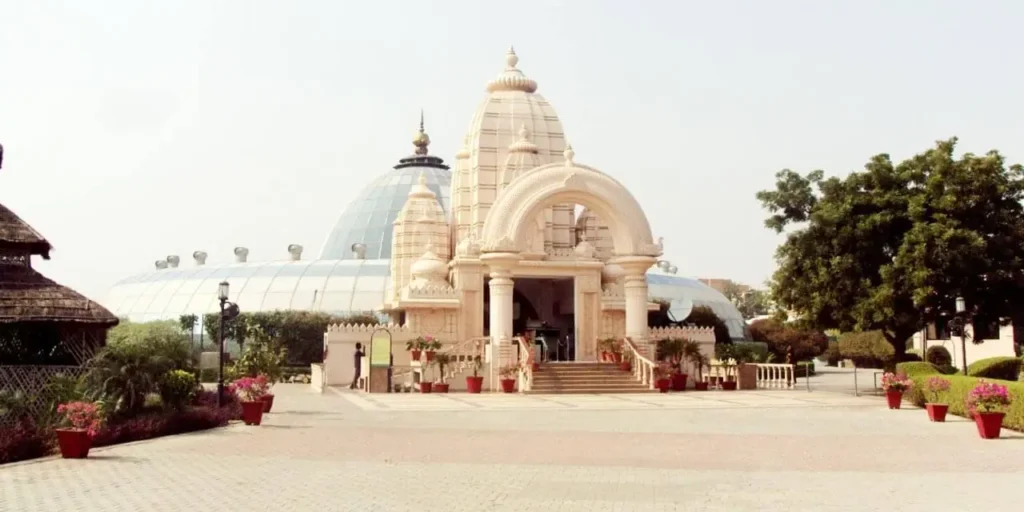
Once finished, it will include twelve recreated forests representing the sacred groves of Braj Mandal, along with a high-speed elevator offering panoramic views.
7. Radha Raman Temple
One of Vrindavan’s seven original temples, Radha Raman houses a self-manifested Shaligram deity rather than a sculpted idol, which gives it a unique spiritual standing among devotees. The temple complex also holds the samadhi of its founder, Gopal Bhatt Goswami.
Unlike the larger, newer temples, this one retains a quieter, more traditional atmosphere.
8. Gita Mandir (Birla Mandir)
Located on the Mathura-Vrindavan road, this red sandstone temple has the complete Bhagavad Gita engraved across its walls. It’s a calmer, more contemplative stop compared to the busier temples nearby.
This makes it a good choice if you want a few quiet minutes to reflect between darshan visits.
9. Radha Vallabh Temple
This Vrindavan temple is distinctive because it has no separate idol of Krishna; only Radha’s crown sits beside the deity, symbolizing Krishna’s eternal presence beside her. Founded by Hith Harivansh Mahaprabhu in the 16th century, it remains an important center for the Radha Vallabh sect.
The temple’s daily rituals follow centuries-old customs that have changed very little over time.
10. Madan Mohan Temple
One of the oldest temples in Vrindavan, Madan Mohan, sits on a small hillock overlooking the Yamuna. Built in 1580 by Sanatana Goswami, one of the original six Goswamis of Vrindavan, the temple’s red sandstone structure has survived centuries of history.
Though partially damaged during Mughal-era invasions, its remaining architecture still reflects classic Vrindavan temple design.
11. Rangji Temple
Built in South Indian Dravidian style, Rangji Temple stands out architecturally from the rest of Vrindavan’s predominantly North Indian temples. Its tall gopuram-style gateway is unusual for the region and makes it instantly recognizable.
The annual Brahmotsavam festival here draws large crowds and features elaborate processions.
12. Vishram Ghat Temples
While Vishram Ghat is best known as a riverside ghat, it’s surrounded by several smaller temples dedicated to various forms of Krishna and Shiva. Evening Yamuna Aarti here, with rows of floating lamps, adds a devotional close to a day of temple visits.
It’s a peaceful way to end a temple-hopping day in Mathura.
Best Time and Tips for Temple Visits
October to March offers the most comfortable weather for visiting famous temples in Mathura, especially if you’re covering several in one day. Mornings tend to be less crowded than evenings, except at Banke Bihari, where darshan timings are limited, and crowds build quickly.
Dress modestly, covering shoulders and knees, and be ready to remove footwear and leather items before entering most temple complexes.
Frequently Asked Questions
1. What are the most famous temples in Mathura?
The Shri Krishna Janmabhoomi Temple and Dwarkadhish Temple are the two most visited and historically significant temples within Mathura city itself, both closely tied to Krishna’s birth and early life.
2. Which is considered the best temple in Mathura?
Krishna Janmabhoomi is widely regarded as the most important due to its connection to Krishna’s birthplace, though Dwarkadhish Temple is equally loved for its architecture and festival celebrations.
3. Is Chandrodaya Mandir open to visitors in 2026?
Yes, the South Wing, or Phase 1, of Chandrodaya Mandir has been partially opened for public darshan, with full Phase 1 completion expected by March 2026, so visitors can experience much of the complex already.
4. What is special about Banke Bihari Temple’s darshan?
Banke Bihari follows a unique Jhaanki Darshan tradition where curtains are repeatedly drawn over the deity throughout the day, rather than offering continuous open darshan like most other temples.
5. How many days do I need to cover the famous temples in Mathura and Vrindavan?
Two full days work well—one for Mathura’s temples like Janmabhoomi and Dwarkadhish, and another for Vrindavan’s temples including Banke Bihari, ISKCON, Prem Mandir, and Chandrodaya Mandir.
6. Is there an entry fee for temples in Mathura and Vrindavan?
Most temples, including Krishna Janmabhoomi, Banke Bihari, ISKCON, and Chandrodaya Mandir, are free to enter, though donations are welcome and some premium darshan slots may have separate arrangements.
7. Can I take photos inside Mathura’s temples?
Photography rules vary by temple. Krishna Janmabhoomi strictly prohibits cameras and phones inside, while temples like ISKCON and Prem Mandir generally allow photography in outer areas.
8. What is the best time of day to visit Banke Bihari Temple?
Morning darshan slots tend to be calmer than evening ones, since Banke Bihari gets especially crowded after sunset and during major festivals like Janmashtami and Holi.
9. Which Vrindavan temple is best for a peaceful, less crowded visit?
Radha Raman Temple and Radha Vallabh Temple both offer a quieter, more traditional experience compared to the larger, more frequented temples like Banke Bihari and Prem Mandir.
10. Are Mathura’s temples suitable for first-time visitors unfamiliar with Hindu rituals?
Yes, most temples welcome visitors of all backgrounds, and dressing modestly while following basic etiquette, like removing footwear, is generally all that’s expected from first-time guests.
This guide is based on verified temple histories, official project updates, and on-ground travel information current for 2026.
Temple timings and construction status, especially for Chandrodaya Mandir, can change, so it’s a good idea to confirm current details before planning your visit.
